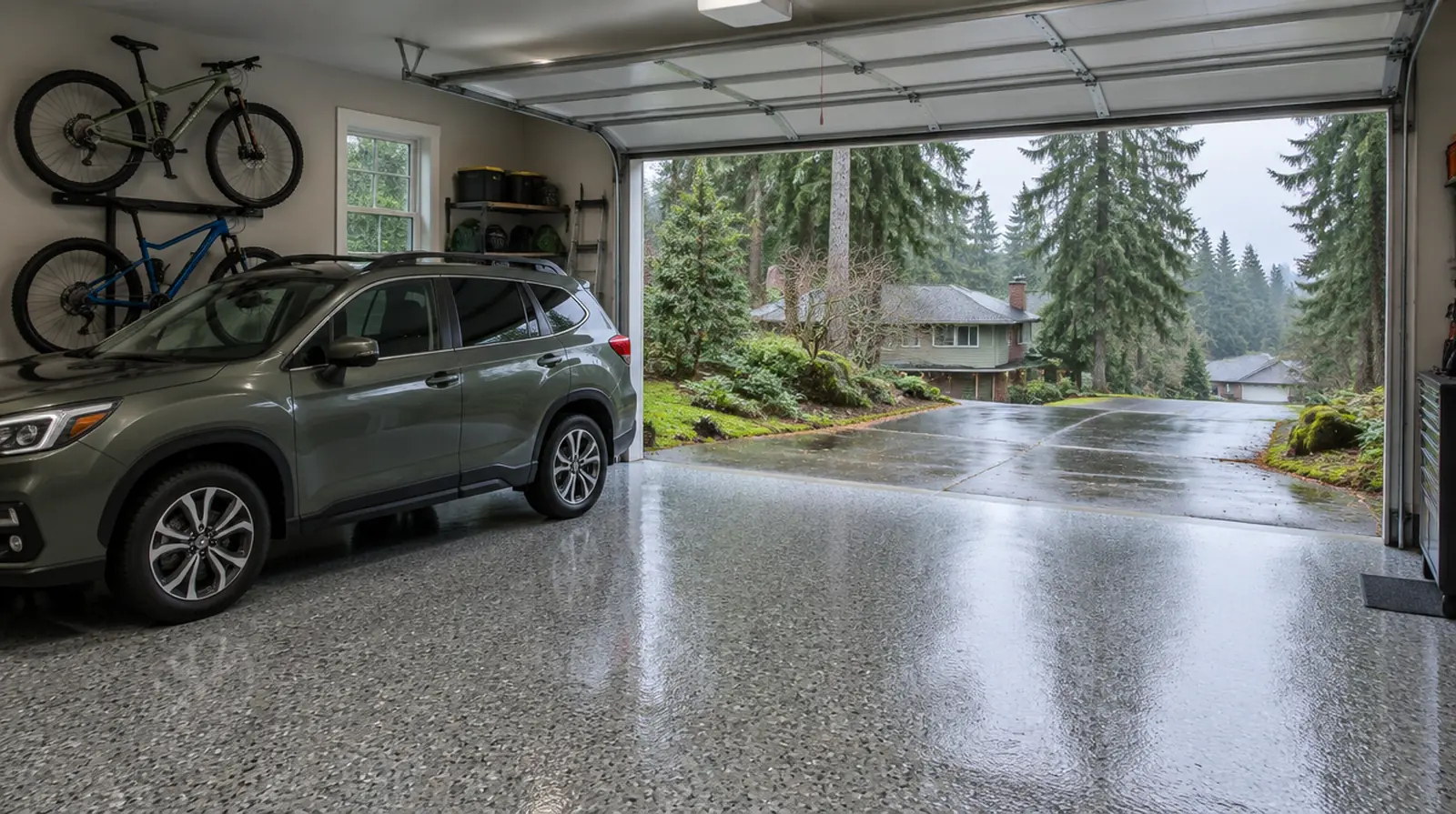
What a wet climate does to a garage floor
Rain here is less about storms and more about persistence. From October into June, cars roll into garages with wet tires, carrying grit, pine needles and road film onto the slab every single day. Water pools in low spots, dries into rings and leaves a fine layer of dirt that tracks into the house. Bare concrete is porous, so it soaks up that moisture along with oil, coffee and anything else that hits it. Over the years the floor darkens, dusts and starts to look neglected no matter how often you sweep.
Many homes in the area also sit on slopes or near wetlands and streams, and groundwater pushes moisture up through the slab from below. That is why cheap roll-on garage paints so often bubble and peel here. A real coating system has to start with proper grinding and an honest moisture test, and sometimes a moisture-tolerant primer, before any color goes down.
Done correctly, a coated floor changes how the space works. Water beads on top instead of soaking in. A squeegee pushes puddles out the door. Dirt sweeps up instead of grinding into the surface, and the brighter floor bounces light around a garage that used to feel like a cave.
How a typical project runs
We start with a visit. We look at the slab, take moisture readings, check for old sealers or paint and talk about how you use the space, whether that is parking, a home gym, a woodshop or storage for kayaks and camping gear. You get a written quote that lists every step.
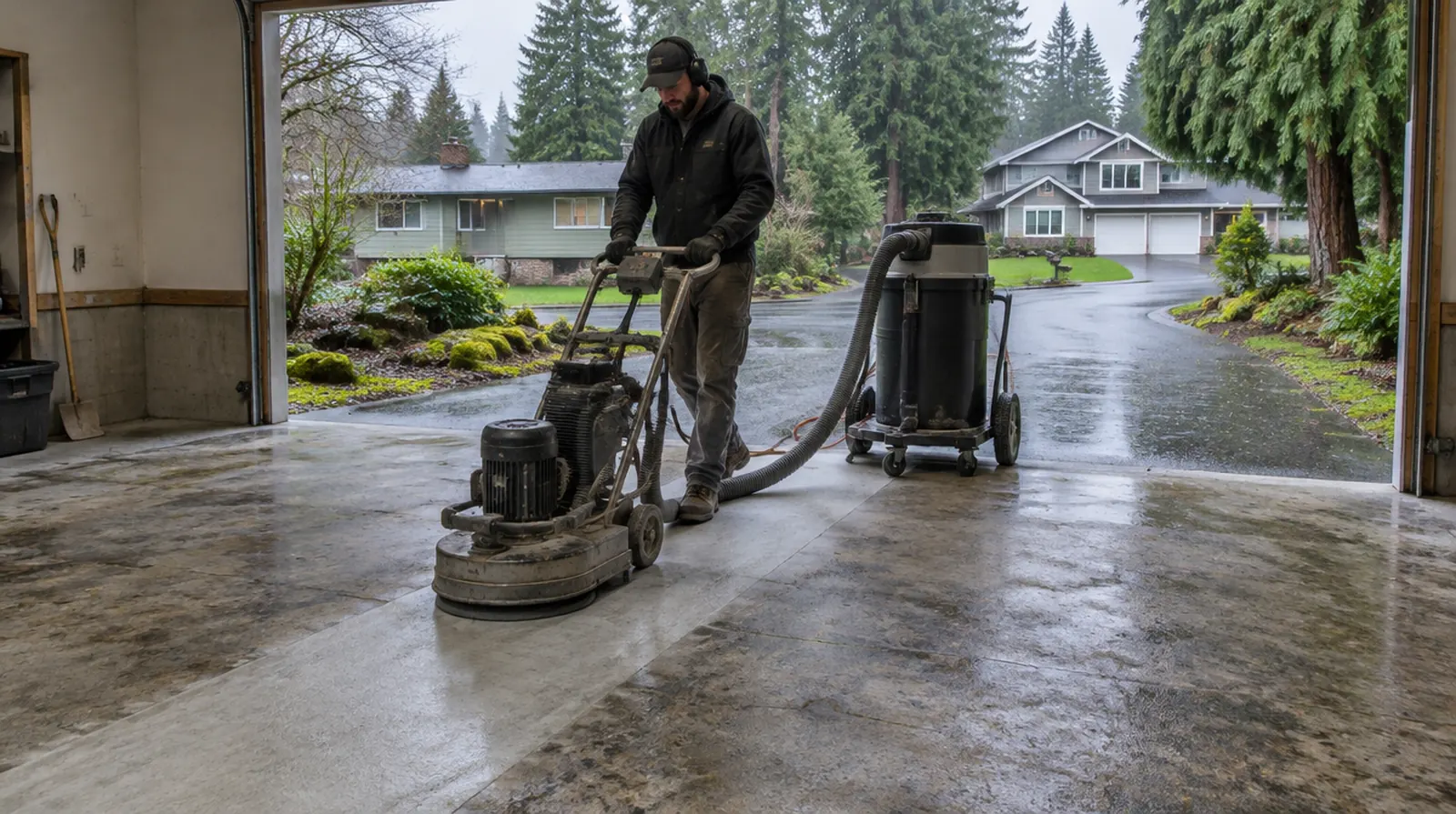
On install day we diamond grind the whole floor with dust-controlled equipment. Grinding opens the pores of the concrete and removes weak surface paste and contamination so the coating bonds mechanically. Cracks, chips and spalls are filled and ground flush. Then we apply the base coat, broadcast flake or color as needed and finish with a durable topcoat. Most garages are done in a day or two.
Systems we install
- Garage floor epoxy for clean, solid-color or flake garage floors.
- Flake flooring with a textured finish that hides dirt and adds grip on wet days.
- Polyaspartic coatings that cure fast and resist yellowing.
- Metallic epoxy for basements, studios and showrooms.
- Commercial epoxy for shops, labs, warehouses and service bays.
- Polished concrete for offices, retail and modern homes.
- Floor repair for peeling or failed coatings.
- Concrete sealing for patios, walks and steps that grow moss.
- Driveway coating for stained or worn driveways.
- Epoxy countertops for kitchens, bars and workbenches.
Why preparation matters more than the product
Most failed floors we are called to fix did not fail because of bad resin. They failed because the coating was rolled over a slab that was dirty, sealed, damp or too smooth. Acid etching and a quick rinse rarely get concrete clean enough. Grinding does. It costs more time and equipment, but it is the difference between a floor that lifts in the tire paths after one winter and a floor that still looks good a decade later.
Moisture testing is the other half. If readings are high, we choose a primer designed to handle vapor rather than ignoring the problem. We would rather tell you up front than come back to a blistered floor.
Built for everyday life
Our garage systems handle hot tire pickup, dropped tools, spilled oil and the constant cycle of wet and dry. Flake finishes add texture so the floor is less slick when it is wet. Topcoats resist chemicals and UV, so floors near an open door do not yellow. For shops and businesses, we offer thicker systems and safety striping.
Who we work with
Homeowners finally finishing the garage, families converting a basement, hobbyists building a shop, landlords refreshing rentals and businesses that need durable, easy-to-clean floors. Every job gets the same prep and the same attention to detail.
Caring for a coated floor
Rinse and squeegee when it gets muddy, sweep or dust mop regularly and use a mild cleaner for oily spots. Put a mat at the entry door. That is about it. No waxing, no sealing every year. If something heavy gouges the surface, it can be spot repaired.
Garages that do more than park cars
Around here the garage is often the most flexible room in the house. It is where wet rain jackets dry, where bikes get tuned before a weekend ride on the trail along the river, where kids practice on a pull-up bar when it is too soggy to play outside and where a second fridge hums next to camping gear. A coated floor makes all of that easier. Spilled sports drinks and bike chain grease wipe off. Rubber gym mats sit flat without trapping grit. Light-colored flake brightens the room on short winter afternoons, so the space feels like part of the home rather than a damp storage shed.
Many of the split-level and newer craftsman homes in the area also have a lower-level room or bonus space next to the garage. We often coat both at once with coordinating systems, a durable flake floor where cars park and a smoother metallic or solid finish in the hobby room, so the two areas feel connected while each surface matches how it is actually used. Doing them together saves setup time and keeps the transition at the doorway clean.
Planning around the weather
Coatings care about temperature and humidity, and fall through spring can be cool and damp. We check slab temperature and dew point on the morning of every install, use heaters or dehumidifiers when they help and choose fast, cool-tolerant products when the forecast is marginal. If conditions are truly wrong, we reschedule rather than gamble with your floor. Late spring and summer book up first, so planning ahead gets you the best dates.
How long before I can park on it?
Usually 24 to 72 hours depending on the system and temperature. Polyaspartic topcoats allow the fastest return.
Will it be slippery when wet?
Flake systems and additives give traction. We will recommend the right texture for your space.
Can you coat a garage with moisture problems?
Often yes, with a moisture-tolerant primer. Testing tells us what is needed.
Do you give written quotes?
Yes. Every quote is free and written, with prep, materials and schedule spelled out.
Ready for a better floor?
Call (425) 696-7086 or request a quote. Office hours: Monday to Friday, 7am to 7pm. We serve Bothell, WA.
Request a free floor quote
Call (425) 696-7086 for a free estimate.