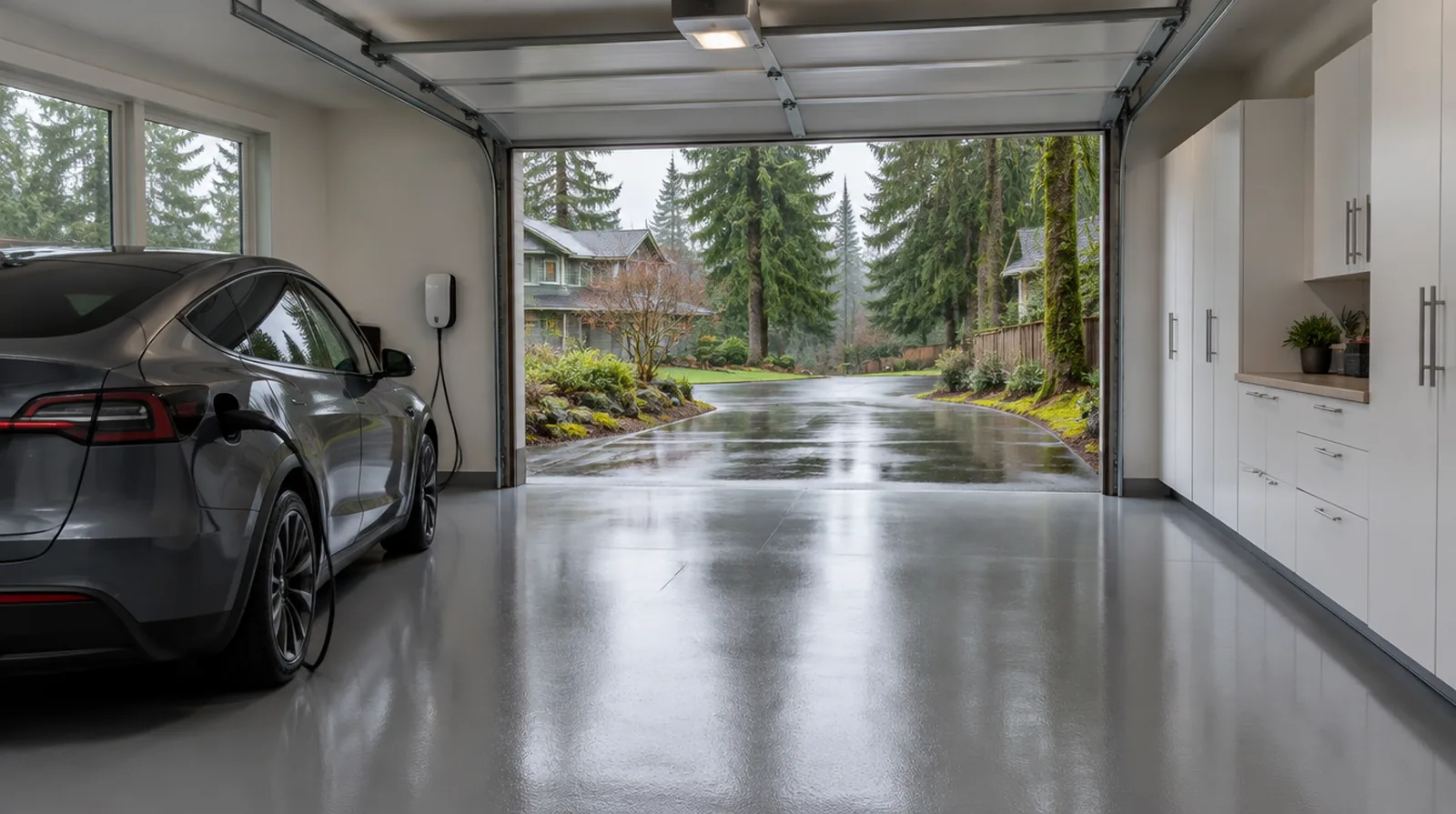
The problem with bare garage concrete
Concrete acts like a hard sponge. In a damp climate, it is almost always absorbing something: rainwater off the car, grit from the road, drips from the lawn mower or oil from an older truck. Stains set in and spread. The surface slowly breaks down into dust that ends up on shoes, shelves and anything stored low. Sweeping helps for a day. Then the cycle starts again.
An epoxy coating closes that sponge. Once the slab is properly prepared and coated, liquids sit on top where you can wipe them away, and the dust stops. The floor becomes something you can clean with a squeegee and a mop instead of something you just live with.
What sets a real epoxy floor apart
Big-box kits are thin, water-based coatings rolled over etched concrete. They often lift where hot tires sit, especially on slabs with moisture coming up from below. Our systems are thicker, use industrial resins and go down over a diamond-ground surface. That combination is what gives a garage floor real lifespan.
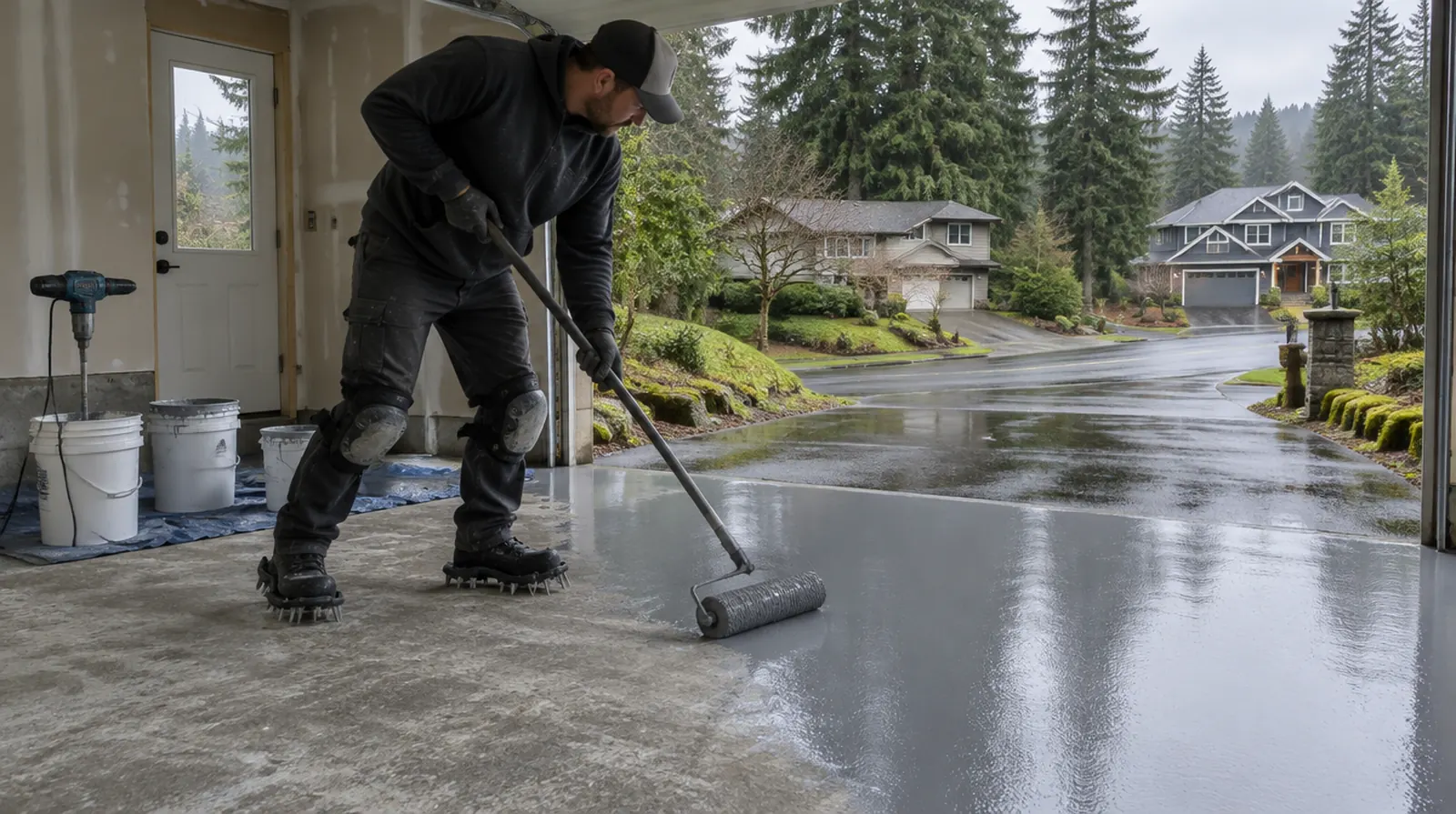
Step by step
- Assessment. We take moisture readings, look for sealers and old paint and note cracks and damage.
- Grinding. Dust-controlled diamond grinding opens the concrete so the coating can bond.
- Repairs. Cracks, chips and pitted areas are filled and ground smooth.
- Primer and base coat. Chosen for your slab, including moisture-tolerant options.
- Color or flake. Solid color, partial flake or full broadcast.
- Topcoat. A durable clear coat that resists hot tires, chemicals and UV.
Solid color or flake?
Solid color floors look clean and modern, and they are easy to see small parts on when you drop them. Flake floors hide dust and water spots between cleanings and add texture for grip, which matters when cars bring in rain all winter. Many homeowners choose a medium to full flake broadcast for a garage they park in daily and a solid color for a shop or gym space.
Moisture testing is not optional here
Homes built on hillsides and near wet ground often have slabs with elevated moisture vapor. A coating sealed over that moisture can blister. We test every slab, and when readings call for it, we use a vapor-tolerant primer. It adds some cost but protects your investment.
Timeline and return to use
Most two-car garages take one to two days. You can usually walk on the floor within a day and park in two to three days, depending on temperature and the topcoat chosen. Cooler, damp weather slows curing, so we plan schedules around conditions.
Pricing basics
The square footage, the condition of the concrete, the amount of repair, whether old coatings must come off and the system you choose all affect price. Your written quote lists each item so you can compare honestly.
Care after install
Rinse muddy areas, squeegee standing water out the door and use a mild cleaner for grime. Avoid dragging sharp metal. Put a plywood pad under kickstands and jack stands. That is all a good floor needs.
Does epoxy yellow?
Some epoxies can amber in sunlight. We use UV-stable topcoats near open doors to prevent that.
How long will it last?
With proper prep, many years of daily parking. Damage can be spot repaired.
Can you coat over my old paint?
No. Old coatings are ground off so the new system bonds to bare concrete.
Get a garage quote
Request a free quote and we will look at your slab and explain the best system for it.
to get a garage floor epoxy quote.
Call (425) 696-7086 for a free estimate.