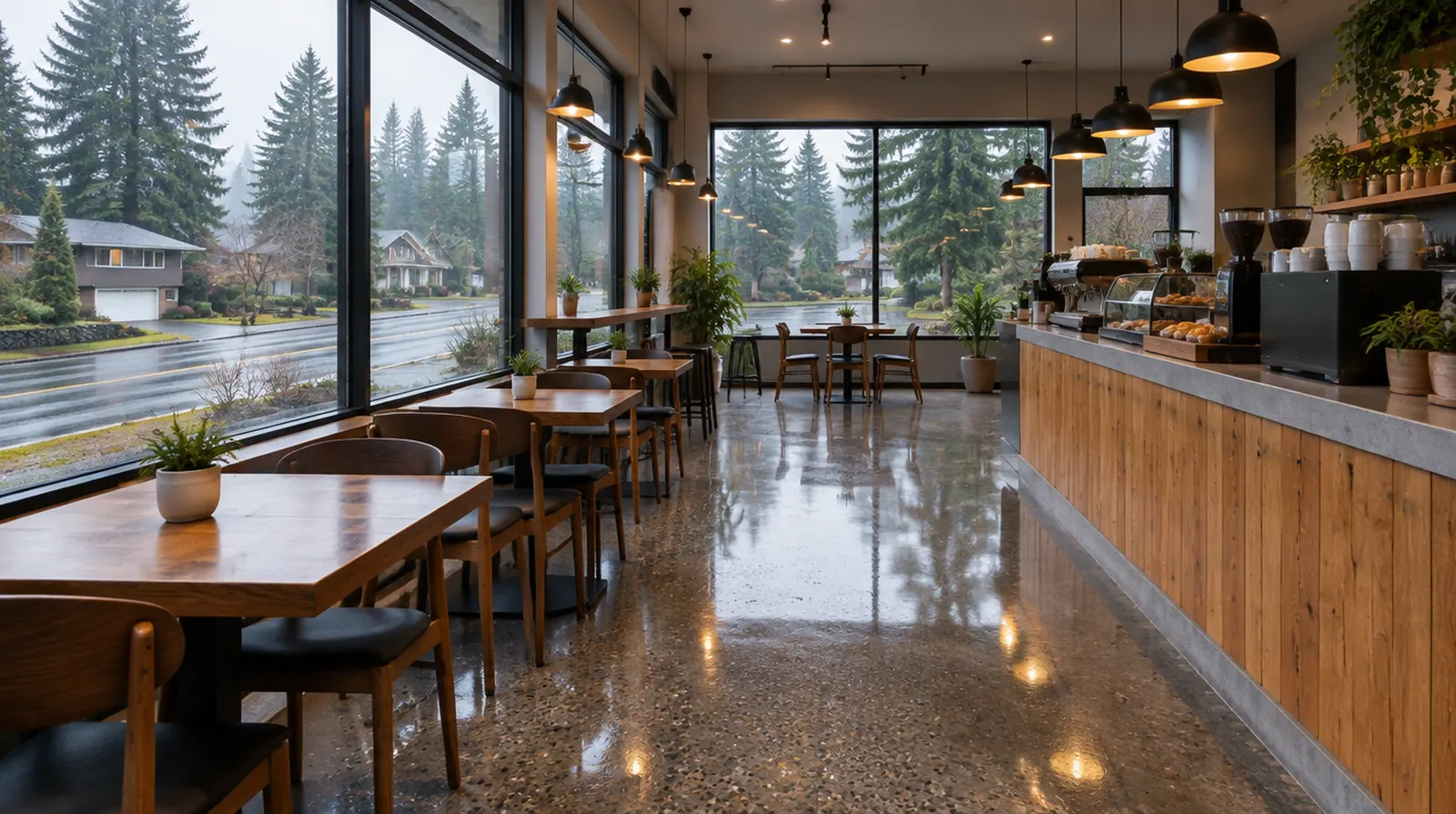
What polished concrete is
Polished concrete is not a coating. We grind the slab itself with progressively finer diamond tooling, apply a chemical densifier that hardens the surface and then polish it to the sheen you want. The floor becomes harder, denser and more resistant to dusting and staining. A protective guard is often applied at the end for extra stain resistance.
Finish options
- Cream finish. Little to no aggregate exposure, a smooth, uniform look.
- Salt and pepper. Light exposure of fine aggregate.
- Full aggregate. Deeper grinding exposes larger stones for a terrazzo-like look.
- Sheen levels. From satin to high gloss.
- Color. Dyes can tint the floor in warm or cool tones.
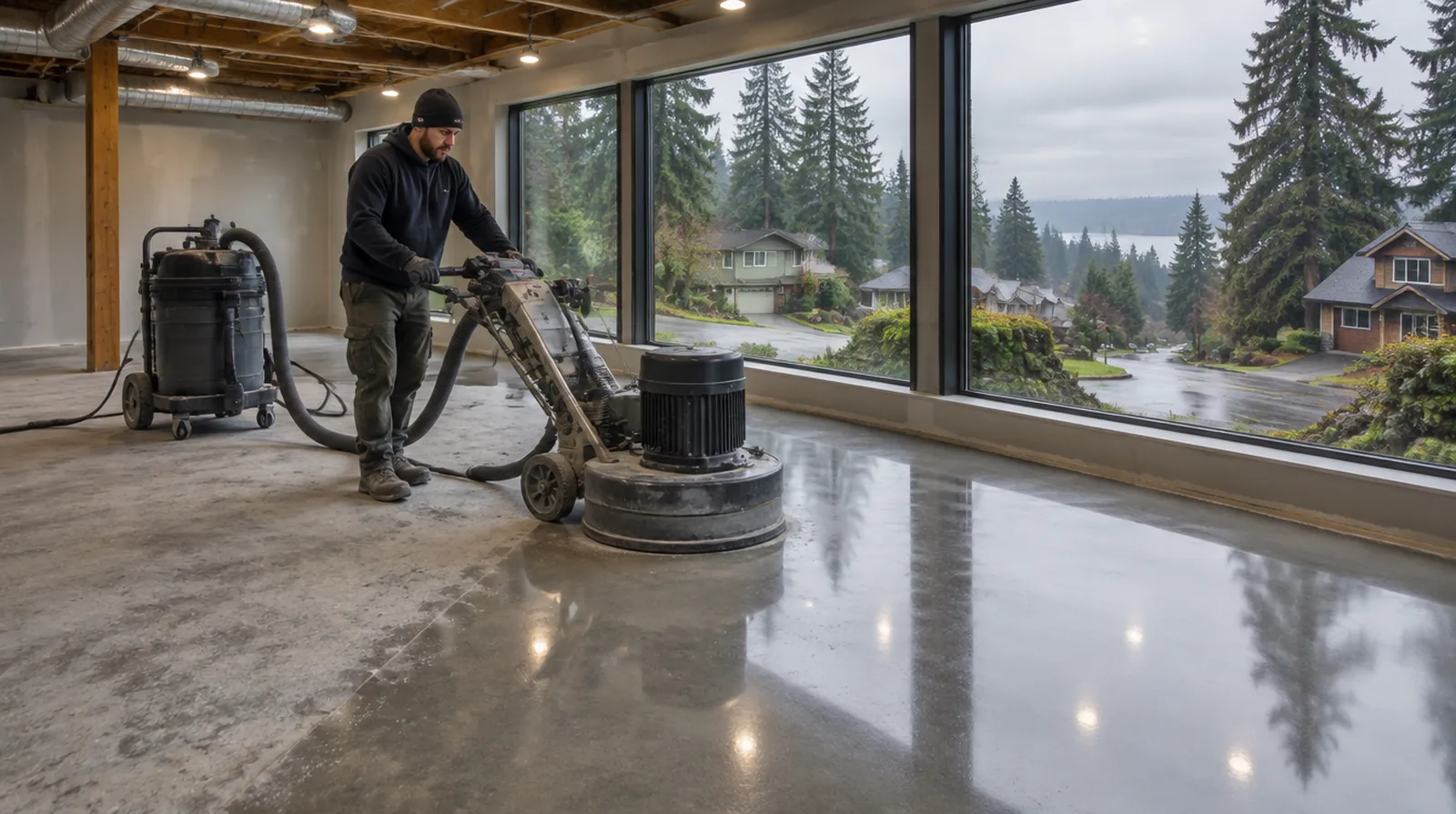
Where it works best
Offices, retail stores, restaurants, cafes, breweries, showrooms, schools and modern homes with exposed slab floors. It is especially popular in new construction where the slab can be protected and polished as part of the build.
Benefits
- Very long lifespan with no coating to peel.
- Low maintenance, just dust mop and damp mop.
- Bright, reflective surface that helps on gray days.
- No coating means no worry about moisture blistering.
Limitations
Polished concrete shows the character of the slab, including cracks, patches and color variation. Some people love that; others prefer a uniform coating. It is also not as stain resistant as a sealed epoxy, so spills should be wiped up promptly. We will walk you through what to expect from your specific slab.
Moisture-friendly by design
Since there is no film on top, vapor coming up from below is less of a concern than with coatings. That makes polishing a smart option for some slabs with high moisture readings.
Our process
- Evaluate the slab and test areas.
- Grind to the desired exposure.
- Fill cracks and joints as needed.
- Densify and hone.
- Polish to the selected sheen and apply a guard.
Maintenance
Dust mop daily in busy spaces and damp mop with a neutral cleaner. Commercial floors benefit from an auto scrubber with soft pads. Periodic burnishing restores the shine.
Refreshing an old polished floor
If you already have a polished floor that has dulled or picked up stains, it can often be honed and repolished without starting over. We assess the wear and quote a refresh that brings back the shine for far less than a full grind.
Polishing in homes
Polished concrete is growing in popularity for homes, especially daylight basements and new builds with exposed slabs. It pairs well with radiant floor heating, because there is no coating to insulate the slab from the heat. In a basement, a polished floor stays bright and is easy to clean, and with area rugs it feels warm and finished. Homeowners also appreciate that there is nothing to peel. If you have a slab that will be covered with carpet or vinyl anyway, polishing is worth a look as a durable, lower-maintenance alternative that shows off the concrete.
New construction timing
For new builds, polishing is easiest before walls and fixtures go in. We coordinate with your builder so the slab is protected during construction and polished at the right stage, which saves time and produces the most even finish.
Is polished concrete slippery?
When clean and dry it typically has good traction. Keep it free of dust and spills.
Can any slab be polished?
Most can. Very soft or heavily damaged slabs may need extra work.
Does it stain?
Densifiers and guards help, but prompt cleanup is best.
Explore polished concrete
Contact us for a site visit and sample area.
to plan a polished concrete floor.
Call (425) 696-7086 for a free estimate.